
What are the formations the 4-3 over odd and the 4-3 odd in the Patriots defensive playbook? Also, when/what situation should they be used?
-
#2
Re: 4-3 over odd and the 4-3 odd
I wanted to make this thread a few years ago when I was looking for the same answers. Hopefully someone like LBz can chime in with a little more nuanced explanation, but...
4-3 Over Plus: when I have seen this front used, it's mainly been as a run stopping front. First time I really noticed it was back when the Ravens ran a 4-3 13 years ago, but it's older than that. Back then they used this as well as the Over-Odd front quite a bit.
In simplest terms, the front shifts to the strong side of the offensive formation. It differs from a conventional 4-3 Over front (which is wrong in Madden). In a conventional 4-3 over (stack in Madden) the defensive tackle shifts to the strong-side in a 3-tech while the defensive end sets on the outside shoulder of the TE. In an over plus, the DT is still in a 3-tech, but the defensive end is slid more heads up, and the outside linebacker is placed on the LOS like so.
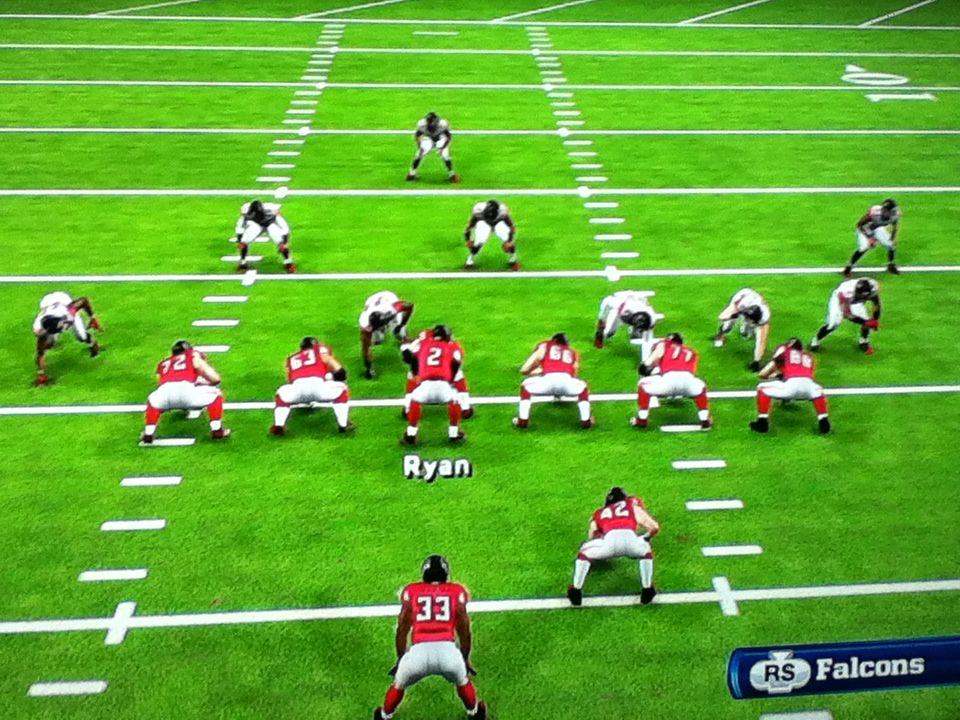
Now this is where I say, I hope someone like LBz would chime in with the actual assignments, because in real life, I have seen them play out a few ways. In real life football I have seen the strong-side end slant into the tackle, and I've also seen him play more 2-gap type of stuff on that side to set the edge.
This is where I had a hard time figuring things out with this front because there are no gap assignments programmed into Madden defenses, and there is no edge setting, so I tend to shy away from this front except in certain instances like when I know a power-o play is coming or even stretches. It usually shuts these down pretty well, but other runs, like counter weaks, or dive plays can be precarious, mainly because of the way the linebackers are programmed. They don't attack gaps, so they're apt to just stand there and get eaten up by blocks on runs that come straight at them, and with the ice skating of the runners, they're all kinds of cutback lanes to the weak side that wouldn't be there in real life because of gap assignments, so if your linemen don't get off their blocks, you could be in some trouble in Madden.
The 4-3 Odd: Odd typically means that the center is covered. Honestly, I don't really know what they're doing here in Madden with this front because there literally is no difference this front and a regular 3-4 odd front.
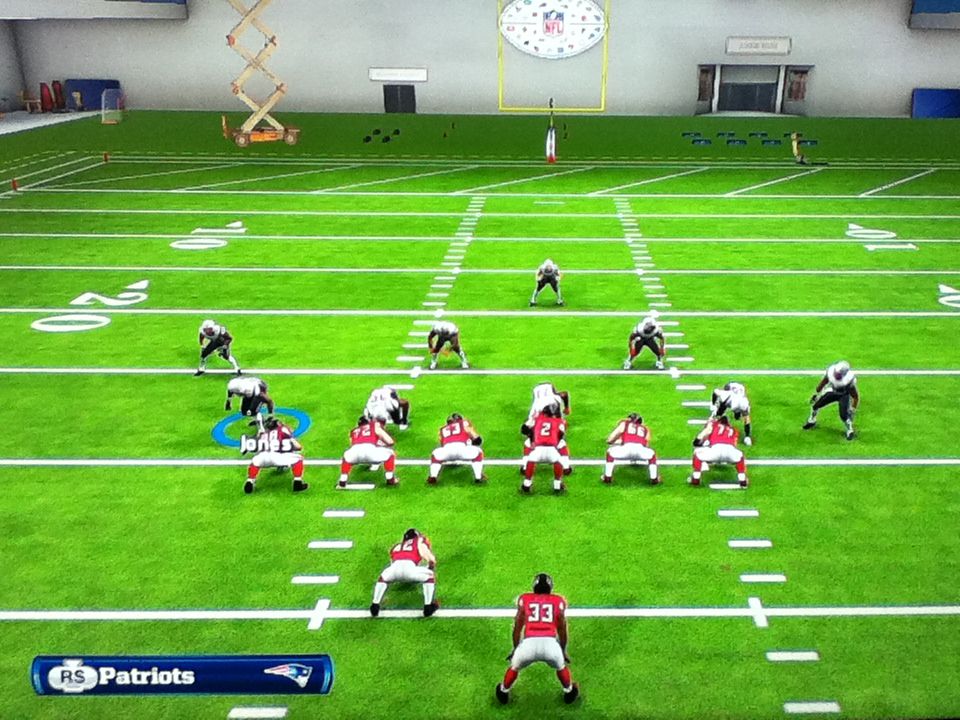
Can you tell which is which?
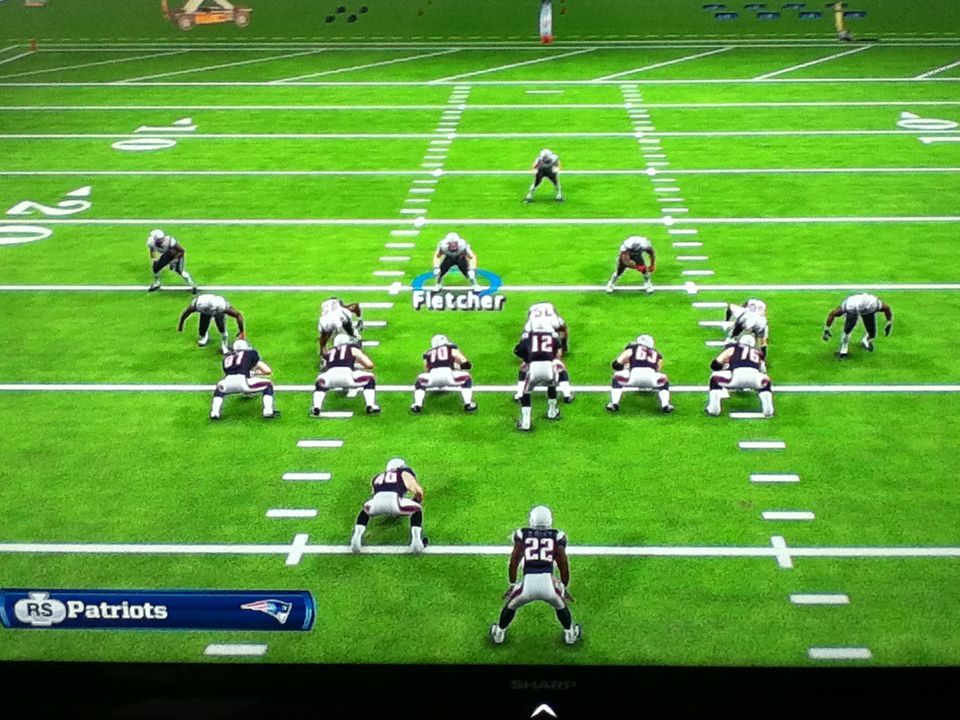
Here is a breakdown of what the Patriots actually run and its nuances. http://www.grantland.com/story/_/id/...triots-defense
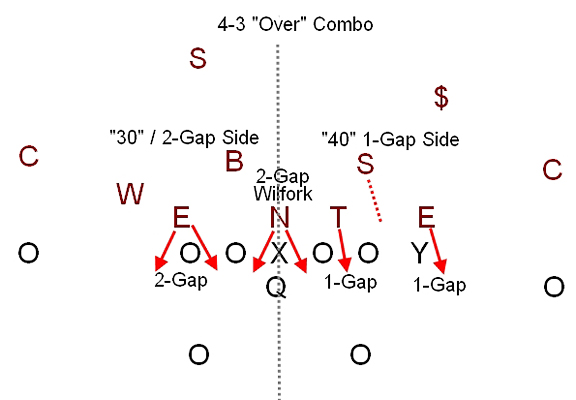

Another thing that bothers me is that this front in the Madden pic replaced the 4-3 Over Odd front in a lot of 4-3 playbooks. This is the front that was in Seattle's playbook in and Tampa in 2012.
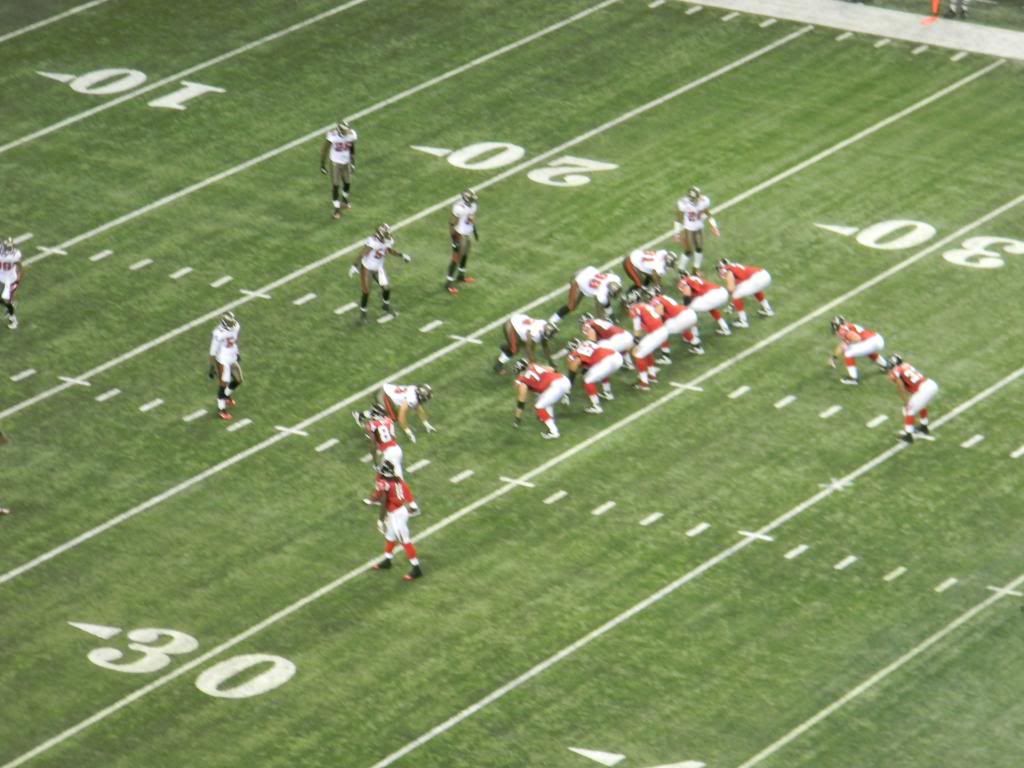
Now I know what this front does. This is a classic run stopping front. The old school Chiefs and the Dolphins pioneered this. It kind of functions as a hybrid front, similar to what Belichick is doing. I have no idea why that front was replaced in the 4-3 playbooks with the 4-3 odd front in Madden 13 because I never saw it run by teams like Seattle or Tampa last year.Last edited by Senator Palmer; 05-14-2013, 12:06 PM."A man can only be beaten in two ways: if he gives up, or if he dies." -
#3
Re: 4-3 over odd and the 4-3 odd
I just went back and re-read the OP's original post. I see you didn't mention anything about the Over Plus front -- I don't know how I missed that. But most of what I typed still holds true. Most of when I have ever seen it used was as a run stopping front. I've seen countless 4-3 teams use it was a changeup from the Falcons who deployed it with a 3 DT package, to the Lions, to the Seahawks, and I've seen almost as many 3-4 teams bring it out because it's pretty interchangeable.
Basically, you're shifting your linemen to the point of attack, only they're going to be head up instead of shaded into gaps. Now in real life this can be precarious if you don't have the size up front, but I have found this to be a very effective front in Madden because there are no gap assignments, and for some reason, defensive linemen, no matter the ratings, shed blocks better when they are playing heads up, so you may find this just as effective as a 3rd down defense in passing situations.


Stram’s Odd Front
About the same time Landry was tinkering with his 4-3 in Dallas, defensive coaches in the A.F.L. were also making changes to the alignment of their front fours. Whether to create mismatches by putting a bigger defensive lineman over an undersized center or to move more defensive players toward the likely point of the offensive attack, the defensive lines were shifting. Instead of aligning symmetrically in the even formation, a few defenses in the A.F.L. began to move one defensive tackle over to align helmet to helmet on the center in what came to be called an “odd” front.
(Calling a 4-3 front an “odd” front is a little confusing. 3-4 fronts with a nose tackle head up on a center may also be called odd fronts. If you’re a stickler for terminology, it’s probably considered correct to call any front with a defensive linemen head up on the center an odd front.)
The odd front 4-3 could be shifted toward or away from the strength of the offense. Though others used it before him and there were other innovations (e.g. the stacked linebackers) that helped contribute to its success in Kansas City, the odd front innovation is often associated with Hank Stram’s defenses of the early 1970s. With huge defensive tackles Buck Buchanan and Curley Culp dominating overmatched centers, the Chiefs’ talented group of linebackers was free to make plays all over the field.
The shifted fronts were the precursor to the over (tackle shifted toward offensive strength) and under (tackle shifted away from offensive strength) fronts discussed in the first installment in this series. Floyd Peters, Joe Collier, Bum Phillips, Monte Kiffin and Tony Dungy, among others, have all made them integral parts of their successful defenses, both 4-3 and 3-4.
The 4-3 front continued to have success in the 1970s, but the league began to trend toward the new 3-4 front to keep offenses from outflanking their three linebackers with bigger and faster running backs and a variety of new passing attacks. By the mid-1980s, a majority of N.F.L. defenses had switched to the 3-4.
Around that time, however, a 4-3 revolution of sorts was happening in the college ranks. Simplicity was the key. Size no longer mattered. Speed and aggressiveness ruled the day. The new “college” 4-3 was winning multiple national titles. Eventually, it would begin winning Super Bowls."A man can only be beaten in two ways: if he gives up, or if he dies."Comment
-
#4
Re: 4-3 over odd and the 4-3 odd
Can we get more stuff like this for the different defensive formations in the game because I'm admittedly ignorant to this stuff seeing as how I'm more of a basketball player
Comment

Comment