
I just saw a video explaining Speed parity. I had no clue that the setting relates to the minimum speed of players. Ex: you lower it to 40. any player under 40 speed will automatically become 40 speed. Ex, you raise it to 75 Any player below 75 speed will automatically become 75 speed. Just figured I would share.
-
-
Re: Speed parity explanation
It would be really nice if EA (or 2k or SCEA for that matter) would give us some detailed documentation on how sliders and settings truly work and what they affect.
It's still such a guessing game and it doesn't need to be.Comment
-
Re: Speed parity explanation
So, if I'm understanding this correctly, this explanation states that the Speed Threshold slider is merely the speed scale? So at 50, the scale is 50-99? At 5, it's 5-99? What if there aren't any players that have speed under let's say 40? Then what happens if the slider is set lower? This is obviously something that's happening behind the scenes IF it's true because it's not reflected in the ratings.
I play with the slider at 95. So, by this explanation, everybody below 95 becomes 95? I don't know if I can buy that my brother lol!"Dunks are tough, but when a 35 footer come rainin out the sky...it'll wire you up"Comment
-
Re: Speed parity explanation
Comment
-
Re: Speed parity explanation
That is not how the slider works at all. If it were, then it would mean at a 100 threshold every single player was 100 speed with no differentiation. All it takes is one single play on 100 threshold to see that is not the case, lol.“No one is more hated than he who speaks the truth.”
― PlatoComment
-
Re: Speed parity explanation
Here's a gif I used in the other speed threshold thread. These are at 100 threshold. If what this guy was saying were how it worked, then my RB wouldn't be creating distance between himself, #'s 11, 13, 37 and 49.
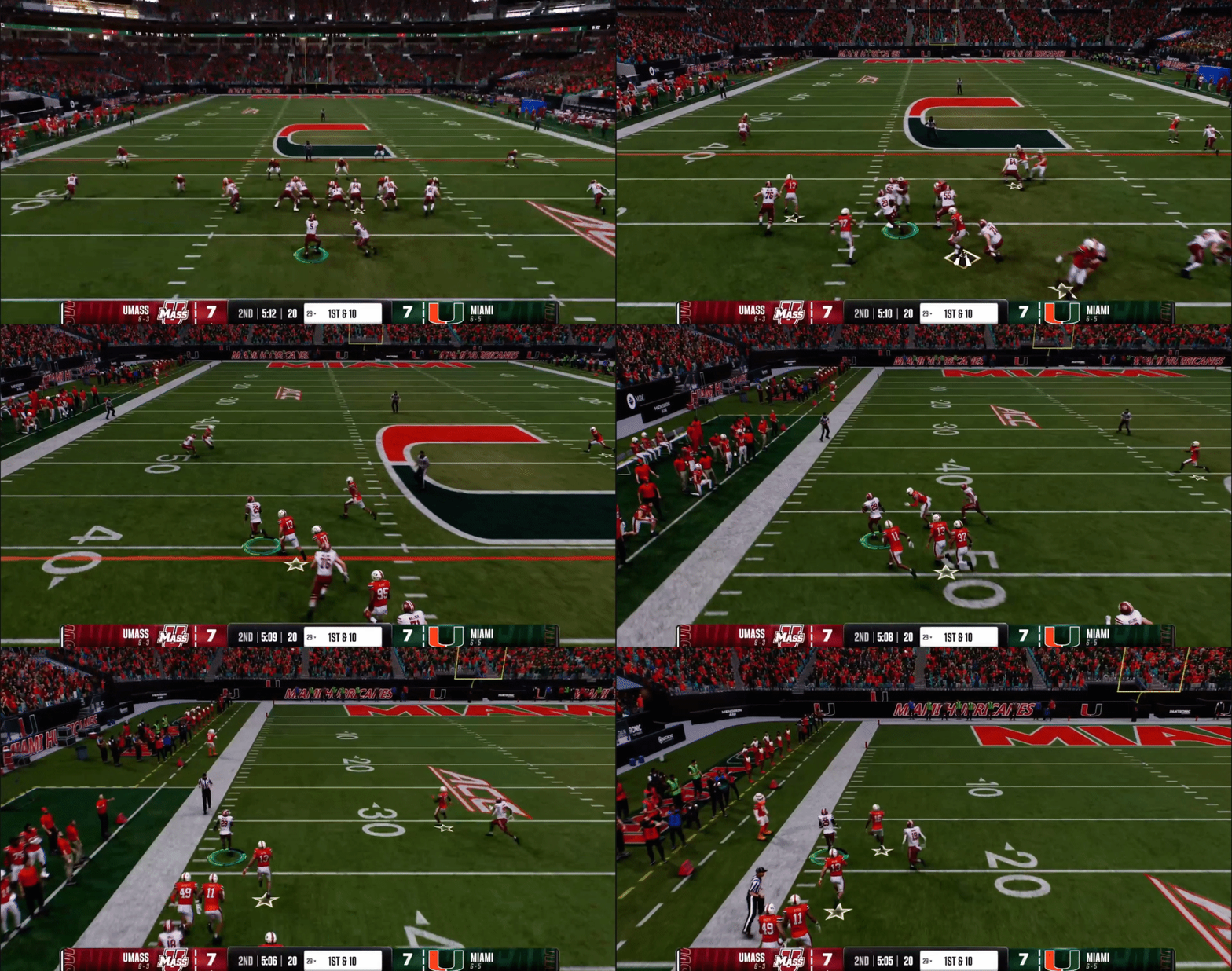
Given how far into the play we are and everyone has been running for 10+ yards, everyone but 49 is done accelerating and is running at their top speed. If the threshold worked the way this guy is saying it does, then my RB and all other players at top speed would be running at the same exact speed, but you can clearly see that is not the case.
The threshold setting is just a modifier that changes how much difference there is between each value of the rating. On any setting 0 through 100 any player that has a higher speed rating than another player will always be faster than that player. All it changes is how much faster they are than them.
Maybe this helps visualize it. Think of the speed ratings sitting on a spectrum where the far left side is a 0 speed rating and the far right is a 100 speed rating. The width of the spectrum represents the difference between each speed value, so a wider bar means there is a greater difference between each value while a shorter bar means there is less difference.
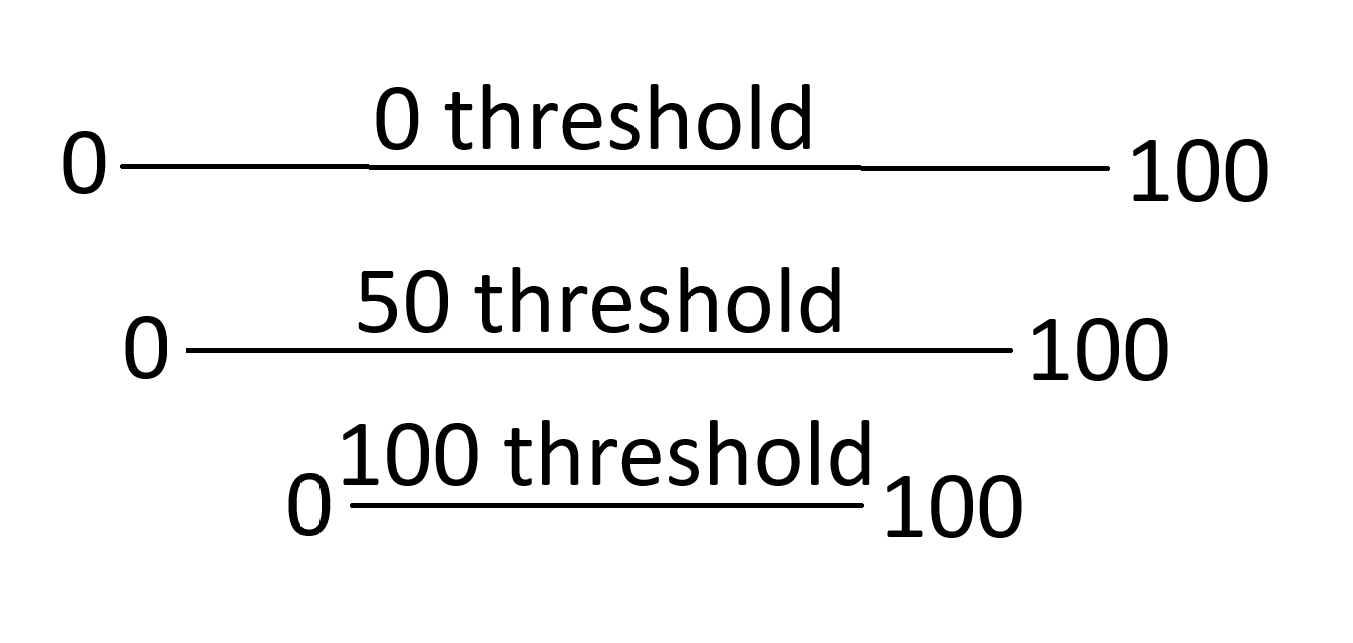
A 90 value will always be further right on the bar than an 89 value and will always cover more ground in the same time frame, the only thing changing between each setting is how much more ground it covers than the 89 value.“No one is more hated than he who speaks the truth.”
― PlatoComment
-
Re: Speed parity explanation
This sounds more legit than any other explanation I have heard about the slider. By this explanation, it would seem like having the slider at 0 or the slider at 100 wouldn't be the most realistic depiction of speed differential between let's say a 90 speed WR vs a 69 speed LB.Last edited by HBKSean216; 08-14-2024, 09:08 PM.Comment
-
Re: Speed parity explanation
Not necessarily. It would depend on how EA has it tuned by default and how the slider itself is tuned. For example, 95 has typically given splits that match up the closest to real life in Madden for a few years now, and an ex-EA employee confirmed this was the known value in-house to use for the most realistic experience.“No one is more hated than he who speaks the truth.”
― PlatoComment
-
Twitch
twitch.tv/Fiddy14
YouTube
http://www.youtube.com/@Fiddy14
X
https://x.com/Fiddy14_
Favorite Teams
Pittsburgh Penguins
New York Mets
Cleveland Cavaliers
Cleveland Browns
Notre Dame Fightin Irish
Liverpool FCComment
-
Re: Speed parity explanation
Because the casual player had a different perception of the speed gap, and they wanted to cater to that side of things.
Sent from my SM-A146U using Operation Sports mobile appComment







Comment